
From Sap to Syrup: How Vermont Maple Syrup Is Made
If you’ve ever poured real Vermont maple syrup over your pancakes and wondered what it takes to make that golden sweetness… the answer is: a lot more than you might think.
Here in Caledonia County, maple syrup isn’t just a product; it’s a craft that starts deep in the woods, relies on perfect timing, and requires equal parts science, labor, and tradition. And while the final pour looks simple, the journey from tree to bottle is anything but.
This month, we’re taking you behind the scenes to show you exactly how pure Vermont maple syrup is made.
Step 1: Tapping the Sugar Maples
It all begins with the trees. Specifically, sugar maples are known for their naturally high sugar content. In late February to early March, sugarmakers begin drilling small, shallow holes (about 1.5" deep) in trees that are at least 40 years old and healthy. Each tap hole gets a spout, which directs sap into a traditional bucket or a more modern tubing system.
Sustainable tapping is key—most producers follow strict guidelines to avoid stressing the trees, ensuring the same maples can be tapped year after year, for generations.
Step 2: Collecting Sap
Once the freeze-thaw cycle begins—cold nights and warm days—sap starts to flow. It’s mostly water, with just 2–3% natural sugar. While that may not seem like much, it’s the base of what will eventually become syrup.
In some sugarbushes, you’ll still see tin buckets collecting sap. But most producers now use food-grade plastic tubing systems that connect trees to a central collection tank—less labor-intensive and more efficient, especially in the rugged terrain of the Northeast Kingdom.
Step 3: Boiling & Evaporating
Now comes the heart of the process: turning sap into syrup.
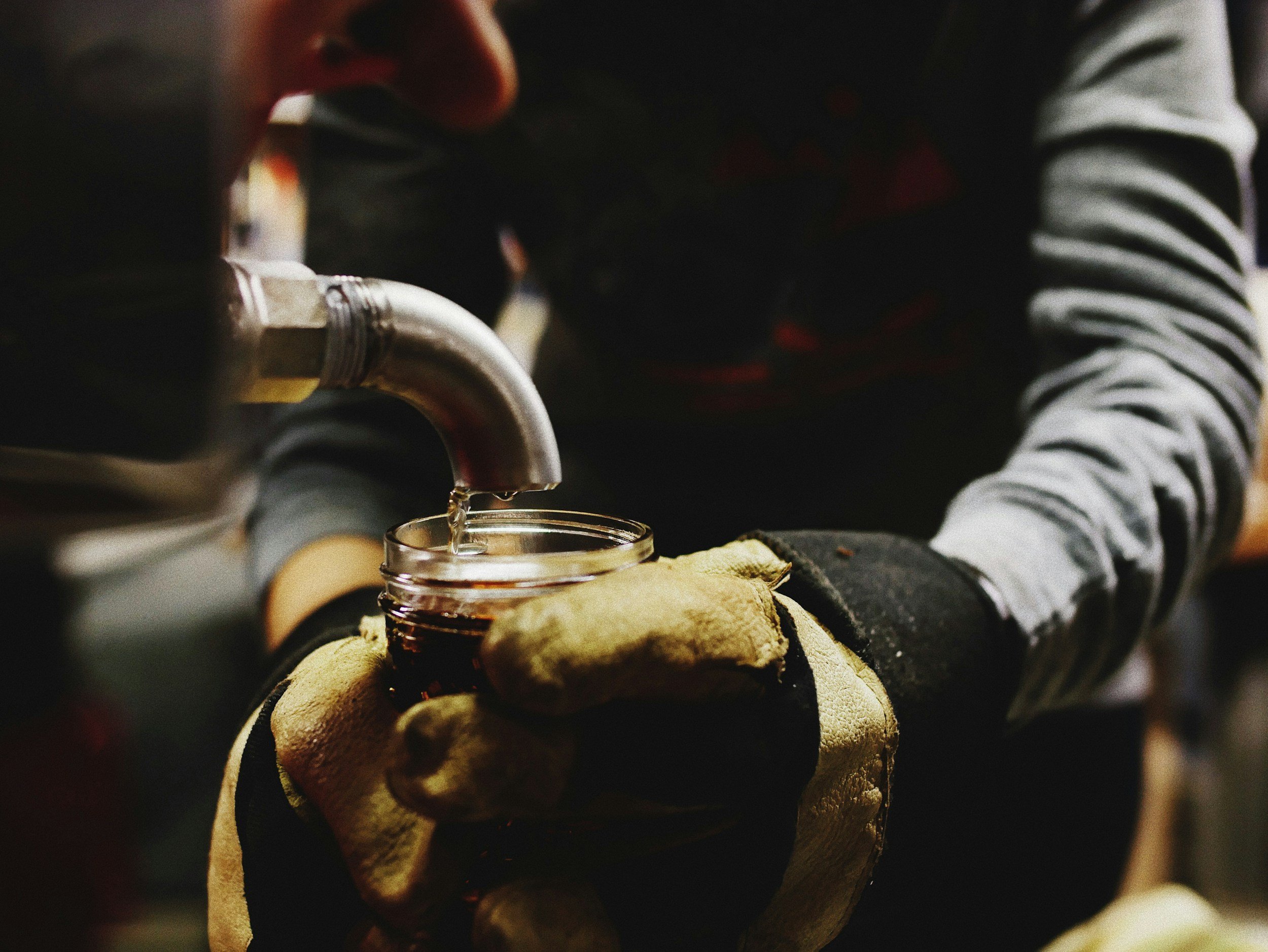
Sap is pumped or carried to the sugarhouse and poured into a large evaporator, often wood-fired right on-site. It takes approximately 40 gallons of sap to produce 1 gallon of syrup, so producers may boil for hours—sometimes overnight during peak season.
As water evaporates, the sugar content concentrates. Once the sap reaches 219°F, it officially becomes syrup.
You’ll know it’s boiling season when you see steam rising from sugarhouse roofs across Caledonia County—it’s one of the most iconic signs of spring in Vermont.
Step 4: Filtering, Grading & Bottling
Once boiled, syrup is filtered to remove “sugar sand” (natural minerals that form during boiling), then graded by color and taste:
● Golden with Delicate Taste – early season, light and mild
● Amber with Rich Taste – classic maple flavor
● Dark with Robust Taste – deeper, more pronounced flavor
● Very Dark with Strong Taste – bold, great for cooking
All Vermont maple syrup must meet state grading and quality standards before it can be sold as “Pure Vermont Maple Syrup.”
From here, it’s bottled, sealed, and labeled, ready to be enjoyed around the world.
More Than Just Syrup, It’s Stewardship
The process of making maple syrup is deeply tied to the land. Producers in Caledonia County take pride in sustainable forestry, responsible tapping practices, and preserving the health of their sugarbushes.
Many of our members have been sugaring the same woods for decades, if not generations. It’s about more than sweetness—it’s about tradition, community, and care.
Want to Taste the Difference?
You can buy real Vermont syrup in stores, but nothing beats the experience of getting it directly from the sugarmakers who boiled it.
Visit our Members Page to meet Caledonia County producers, shop online, or plan a visit during sugaring season.